Activist. Actor. Educator. TBI Survivor.
Writer of Truth. Daughter of the Diaspora. Architect of Sanctuary.
Shanda Quintal
Building a global sanctuary for healing, sustainability, and the people the world forgets.
TABLE OF CONTENTS
I use AI due to cognitive changes from multiple TBIs. It’s an accessibility tool. The stories, visions and voice are mine—AI helps shape the words when I can’t.
Your ethos is not your branding.
It is not your resume.
It is not the mask you put on to survive.Your ethos is the pattern of your choices when no one is watching.It is what you protect.
It is what you refuse.
It is what you build even when you are tired, scared, and alone.For some people, ethos is convenience.
For others, it is profit.
For others, it is silence.But for those who have lived through injustice, illness, loss, and systems that demanded we “earn” the right to exist — ethos becomes something deeper.
It becomes integrity under pressure.My ethos is simple:
Dignity over compliance.
Truth over comfort.
Care over extraction.
Justice over appearances.I do not believe in systems that place profit over people.
I do not believe in “success” that requires self-erasure.
And I do not believe survival should require constant performance.I do not believe in masks.Ethos, for me, is alignment.
Between what I say, what I build, and who I protect.It shows up in how I advocate.
How I create.
How I love.
How I heal.
How I continue — even in a the world that moves too fast for me.Your ethos is not what you claim in calm seasons.
It is what remains when everything is stripped away.So the real question is not:
“What do you believe?”The real question is:
Who do you become when things get hard?That answer — not your titles, not your followers, not your credentials —
is your ethos.
How I Got Here
I describe the effects of traumatic brain injuries like a computer - the hard drive is intact but the screen is cracked, the speakers are crackling, the wires are frayed and the keyboard is missing keys.A year and a half after my second concussion, I developed sepsis. That experience felt different. I describe it like a house that caught on fire and the flames were put out—but everything inside was left charred.The structure still stands, but the damage is everywhere.And in any house fire, the weakest area sustains the most damage.That weak spot is my brain. And my nervous system.My journey with traumatic brain injury began with another trauma: being wrongfully terminated after challenging racial bias and discriminatory curriculum at Young Audiences Charter School in New Orleans.I stood up for my students—children who deserved to see themselves reflected in what they were being taught—and I lost my job for it.What followed was a deep emotional and physical unraveling.The medication I was prescribed for anxiety and depression caused severe dizziness. One day, I lost my balance and hit my head on the kitchen counter. That was my first TBI. Once you have one, the risk of another increases.Two months later, with my balance and vision already compromised, I jogged directly into a glass wall at dusk. I broke my nose and blacked out. I remember the pain—and then a strange darkness, like a black velvet universe with no stars. A security guard found me on the ground. I could hear her voice but couldn’t fully process what she was saying.Eventually, the pain disappeared. I thought I was fine. I wasn’t. It was adrenaline.I later drove myself to the ER. Diagnosis: another concussion and a broken nose.The headaches lasted for months. Tylenol stopped working. Sumatriptan helped the pain, but not the deeper neurological damage I didn’t yet understand.Six weeks later, I started a new job and realized something was wrong. I couldn’t follow instructions, retain information, or process tasks the way I used to. It wasn’t about intelligence. My mind still held knowledge—but my internal system felt rewired.The hardest part was that I “looked fine.”
People couldn’t see the injury, so they underestimated the impact.I began researching everything I could—neuro exercises, red light therapy, supplements, cognitive games. Slowly, I made progress.A year later, a neurologist finally confirmed the TBIs and prescribed physical and speech therapy. Real support, at last.But two weeks after that, I aspirated during a routine colonoscopy, developed pneumonia, and went into sepsis. The physical trauma affected my entire body, including my brain, setting my recovery back again.Healing, I’ve learned, is not linear.
It moves forward, backward, sideways, and sometimes collapses entirely.And still—
I am here.
Cognition vs Intelligence
Before I go any further, I want to explain something most people don’t understand—because I didn’t either, not until I had to live it.There’s a big difference between cognition and intelligence.
And if you’ve never had a brain injury, you might not realize how one can be affected while the other stays intact. I know I didn't.Cognition vs IntelligenceCognition is how your brain processes information.
It’s your ability to focus, remember, follow instructions, organize thoughts, and respond to what’s in front of you.
It’s the signal—how clean or scrambled it is, how fast or slow it moves, whether it gets through at all.Cognition includes:
- Attention and focus
- Memory
- Processing speed
- Language comprehension
- Problem-solving
- Executive function (planning, organizing, initiating tasks)Intelligence is what you know.
It’s your insight, your brilliance, your creativity.
It’s the ability to connect dots, learn from experience, and understand the world in ways others can’t always name.Intelligence includes:
- Reasoning ability
- Understanding concepts
- Learning from experience
- Applying knowledge to new situations
- Creativity, insight, and adaptabilityWhen you’ve had a brain injury, like I have, your intelligence doesn’t disappear.
But your access to it might.You might know exactly what needs to be done—but the thought slips.
You might understand something deeply—but struggle to explain it out loud.
You might be trying to focus—but your brain won’t cooperate.
And it’s maddening—because you know you’re still in there.My hard drive is intact.
But sometimes the wires are frayed.
The screen is cracked.
The signal is static-y.And even though others can’t always see it, it’s real.
It’s work. It’s exhausting.
And it’s not about being less smart.
It’s about surviving with a system that’s glitching in ways most people can’t understand—and, to be honest, don’t even know that system is there.That’s the cruelest part. Not just that people don’t understand—
but that they don’t even know there’s something to understand.You look “fine,” so they assume you are fine.
Sometimes I get, “I forget my keys all the time—we’re just getting older.”
That comparison erases everything I’m going through.
I tried explaining. But if doesn't resonate, it can’t land.
My energy is precious—and these days, it’s limited.
And, people who don't get that are unsafe for me.They don’t see the mental fatigue after ten minutes of focus.
Or the blank stare when the words won’t line up.
Or the panic when you forget something important—again.
Or the fear when you're driving on a street you've driven since you were a teenager, and you don't know where you're going or recognize where you are.
Or how exhausting it is to pass for “okay.”
They don’t know you’re battling a fog that has no shape and no schedule.It’s not just invisible. It’s incomprehensible to most people.But I know it exists.And that truth? That’s the ground I stand on.
I'm Building Thrive in Belize
Over the past seven years, I’ve invested more than $100,000 of my own resources into this project—so giving up is not an option. And those funds weren’t just for the land, but for its spirit and structure. That includes:• 🌱 Sustainability and regenerative design training
• 🛖 Earthen building and vernacular architecture studies
• 🌍 Climate change leadership certifications
• 🌿 Permaculture design and ecological farming practices
• 🎋 Bamboo cultivation and agroforestry
• 🥬 Small-scale farming and food sovereignty
• 🧠 Collective trauma healing courses
• 🤎 Community care frameworks
• 🌺 Ancestral herbal healing and ethnobotanical research
• ✈️ Travel and accommodations for immersive learning
• 🤝🏾 Relationship-building with key organizations, both globally and in Belize.During most of my visits to Belize, I stay at the Toucan Ridge Ecology and Education Society—a field station and conservation research center focused on protecting biodiversity. I learned a lot there that directly informs Thrive’s design and direction.
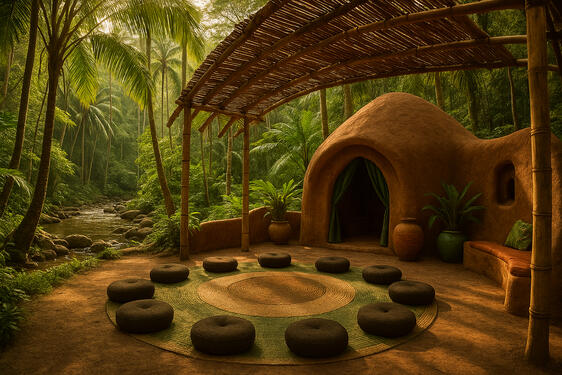

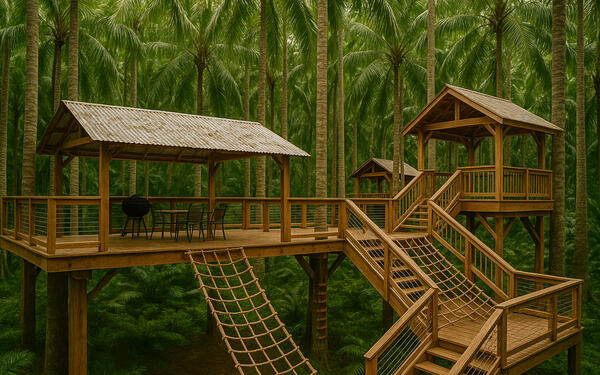


This has never been a casual dream. It’s been a full-bodied, whole-hearted commitment. My financial, emotional, and spiritual roots are already there.Thrive International was never just a vision I was dreaming about. It’s always been a project in motion—even if, at times, the motion was invisible, even to me. But now, it’s not just a vision. It’s a lifeline. And it’s the only one I have.There’s already a foundation: 21 acres of rainforest. A ready site. A calling.There’s already community: partners ready to build, learn, and heal.What I need now—is to be there. Not someday. Now.
To live in alignment with the future I’ve been holding space for.
Not just for others. For myself.Thrive is not just a project.
It’s a sanctuary.
A place where healing is collective.
Where care is mutual.
Where it’s safe to be human again.If this story resonates—if you believe in spaces where trauma is met with purpose—we would appreciate your support. We have a GoFundMe. The button is at the bottom.Every dollar. Every share. Every act of belief proves that this vision matters—and helps bring Thrive to life.THRIVE INTERNATIONAL
Culturally and Gender Competent Mental Health Resources
If you’re in crisis, call or text 988.
There’s someone on the line who will stay with you.
No judgment. Just help.
988 Lifeline is a suicide and crisis hotline. You can also go online at 988lifeline.org.But after the crisis, where do you go?Because not everyone can heal in a room where they have to explain who they are first.
Where their name is mispronounced.
Where their story doesn’t fit the forms.This page is for us.
For people who need therapists who understand our culture, our gender, our lives.Start here. Find what feels like care.
BLACK / AFRICAN AMERICAN COMMUNITYBEAM: Black Emotional and Mental Health Collective
National training and healing network supporting Black mental healthBlack Men Heal
Offers free therapy sessions and wellness resources for men of colorBlack Mental Health Alliance
Educational forums, therapist directory, and culturally relevant mental health servicesBlack Therapists Rock
Collective healing through a state-by-state therapist directoryBlack Women's Health Imperative - My Sister’s Keeper program
Health equity and wellness programs for Black womenBoris Lawrence Hensen Foundation
Works to eradicate stigma around mental health in the African American community and offers free virtual therapy and wellness support for African AmericansEthel’s Club
Social and wellness company for people of color with classes and eventsNAMI: National Alliance on Mental Illness – Black Community Resources
Support groups, education, and helplines tailored for Black communitiesSister Afya Community Mental Wellness
Mental wellness services centering Black women’s healing. In Chicago but has great resources.Sisters Network Inc.
African American breast cancer survivorship and advocacy organizationTherapy for Black Girls
Therapist locator, blog, podcast, and mental health education for Black women and girlsTherapy for Black Men
Judgment-free therapy directory and support for Black menTouch, The Black Breast Cancer Alliance
Advocacy and support for Black breast cancer patients and survivorsPODCASTS AND APPS FO BLACK / AFRICAN AMERICAN COMMUNITYBalanced Black Girl
A mindful collective that puts the needs of Black women first, by creating free and accessible wellness content and resources, amplifying the voices of Black and brown women in wellness, and shining light on healers and practitioners making waves in our community.Liberate Meditation App
The daily meditation app for us, by us. A safe space for the Black community to develop a daily meditation habit.The Safe Place App
This minority mental health app focuses on self-care and mental health in the African American community. For Apple and Android.Black Mental Matters Podcast
Breaking the stigma of mental health issues, through education, awareness, and advocacy.ASIAN AMERICAN / PACIFIC ISLANDER COMMUNITIESAsian Mental Health Collective
Therapist directories and community building to destigmatize Asian mental health.Asians Do Therapy
Culturally relevant therapy info and podcast promoting access and understanding.MannMukti
Open dialogue and education about South Asian mental health issues.National Asian American Pacific Islander Mental Health Association (NAAPIMHA)
Nationwide directory and culturally competent resources for AAPI mental health.South Asian Mental Health Initiative and Network (SAMHIN)
Awareness, support, and education on South Asian mental wellness.South Asian Providers Database
Searchable list of South Asian mental health professionals.
South Asian Therapists
Therapist directory for people of Indian, Pakistani, Bangladeshi, and Nepali heritage.Viet-C.A.R.E
Mental health outreach and culturally relevant services for Vietnamese Americans.PODCASTS AND APPS FOR AAPI COMMUNITIESAsians Do Therapy Podcast
Real conversations with Asians on both sides of the couch.The Full Well Podcast
Explores mental health and Asian American identity.Thrive Spice
Wellness podcast and workshops for Asian American changemakers.LATINX / HISPANIC COMMUNITIESLatinx Therapy
National bilingual therapist directory, workshops, and podcast.National Alliance for Hispanic Health
Improves culturally competent health care across Latinx communities.Therapy for Latinx
Helps communities heal by increasing access to inclusive therapists.PODCASTS / APPS FOR LATINX COMMUNITIESLatinx Therapy Podcast
Weekly discussions on Latinx mental health, myths, and healing.INDIGENOUS, NATIVE AMERICAN & ALASKA NATIVE COMMUNITIESAlaska Native Tribal Health Consortium
Tribal health services for Alaska Natives and American Indians.One Sky Center
Directory of trusted Indigenous mental health professionals.Strong Hearts Native Helpline
Confidential helpline staffed by Native advocates for survivors of violence.Tribal Behavioral Health Resource Directory (Oklahoma)
Regional directory of Indigenous mental and behavioral health support.PODCASTS / APPS FOR INDIGENOUS COMMUNITIESAll My Relations
Podcast exploring Indigenous identity, land, and relationships.Getting Real About Native American Mental Health
Discussion of cultural inclusion and de-pathologizing Native experiences.Indigenae Podcast
Wellness conversations from Indigenous women in medicine and public health.GENDER COMPETENT MENTAL HEALTHThe Fenway Institute
The mission of The Fenway Institute is to optimize health and well-being for sexual and gender minorities (SGM) and those affected by HIV.GLAAD Mental Health
GLADD is a non-profit organization focused on LGBTQ advocacy and cultural changeThe National LGBTQIA+ Health Education Center
Provides confidential peer support for youth, adults, and seniors, including phone, text, and online chat.OutCare
The most comprehensive and trusted resource for LGBTQ+ health equity.PFLAG
Offers support, education, and advocacy for LGBTQ+ individuals and their families.SAGE (Services & Advocacy for LGBTQ Elders)
Focuses on the mental health and well-being of older LGBTQ+ individuals.Trans Lifeline
Offers peer support specifically for transgender people, including a 24/7 crisis line.The Trevor Project
Offers confidential crisis intervention and suicide prevention services for LGBTQ youth, including a 24/7 text line. You can text START to 678678.
Displacement Resources
On January 20, 2025, President Trump signed an executive order called “Realigning the United States Refugee Admissions Program,” and it paused the U.S. refugee resettlement program. This page is for people who are interested in the various organizations that focus on resettlement, asylum, and human rights for displaced people. Some of the organizations below are US-based and their sites have helpful information. Others are international organizations with offices in other countries.International Office of Mobility
IOM is part of the United Nations System and stands as the leading intergovernmental organization in the field of migration. The organization collaborates with governmental, intergovernmental and non-governmental partners to improve the resilience of people on the move, particularly those in situations of vulnerability.
The IOM Constitution recognizes the link between migration and economic, social and cultural development, as well as to the right of freedom of movement.
IOM’s work is focused on the following three objectives:
• Saving lives and protecting people on the move
• Driving solutions to displacement
• Facilitating pathways for regular migrationRefugees International
Refugees International was started in 1979 as a citizens’ movement to defend the rights of people fleeing Vietnam, Cambodia, and Laos. Since then, they have expanded to become a globally focused organization, advocating wherever rights and refuge are at risk.
Refugees International advocates for lifesaving assistance, human rights, and protection for displaced people and promotes solutions to displacement crises.
To ensure the independence and credibility of our work, Refugees International does not accept government or UN funding. Our critical role helps us advance accountability and allows us to speak freely when others sometimes cannot.International Rescue Committee
In 1933, Albert Einstein and a small group of humanitarians formed what would become the International Rescue Committee. Today, we deliver lasting impact by providing health care, helping children learn, and empowering individuals and communities to become self-reliant, always with a focus on the unique needs of women and girls. Our work spans more than 40 crisis-affected countries, and we provide resettlement, asylum, and integration services in communities across the United States and Europe.International Refugee Assistance Project
The International Refugee Assistance Project (IRAP) integrates legal aid, strategic litigation, policy advocacy, media advocacy, and legal information to uphold and advance the rights of people seeking safety around the world. Headquartered in NY but offices Europe, China, Japan, the Middle and Austrailia.US Committee for Refugees and Immigrants
The U.S. Committee for Refugees and Immigrants (USCRI), established in 1911, is a nongovernmental, not-for-profit international organization dedicated to addressing the needs and rights of refugees and immigrants. Has offices in El Salvador, Kenya, Honduras and Mexico.Immigrant Legal Resource Center
The mission of the Immigrant Legal Resource Center (ILRC) is to work with and educate immigrants, community organizations, and the legal sector to continue to build a democratic society that values diversity and the rights of all people.UN Refugee Agency
UNHCR leads international action to protect people forced to flee conflict and persecution and those denied a nationality.US Office of Refugee and Resettlement
Good luck.
Text